Hoyer Lifts at Home: Choosing a Patient Lift and Sling
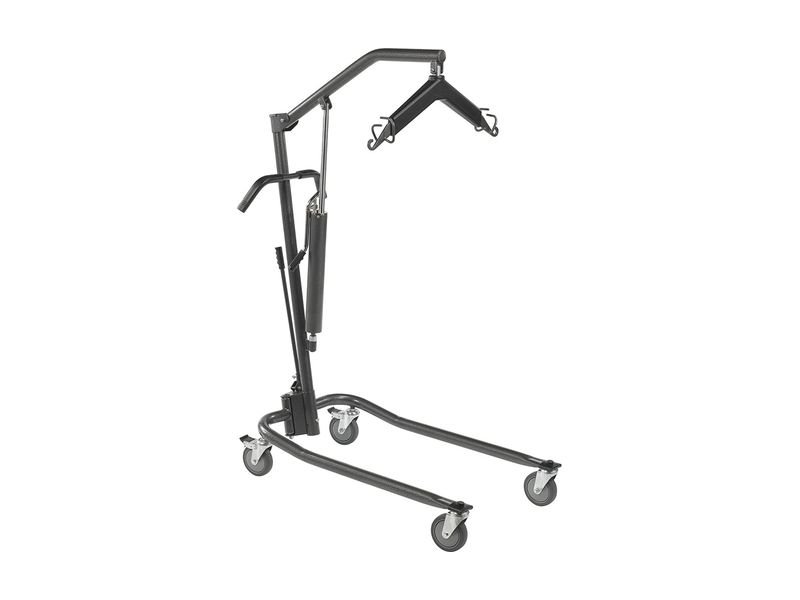
Lifting a loved one from bed to chair by hand is one of the most common ways caregivers get hurt, and it's risky for the person being lifted too. A patient lift (often called a Hoyer lift, after one of the first brands) does the lifting for you. Here's how to choose one and use it safely.
Types of patient lifts
| Lift | How it works | Best for |
|---|---|---|
| Manual hydraulic lift | Pump a handle to raise; turn a valve to lower | Occasional transfers, lower cost |
| Electric (battery) lift | Push-button raise and lower | Frequent transfers, caregivers with limited strength |
| Sit-to-stand lift | Helps the person rise from sitting to standing | People who can bear some weight and hold on with their hands |
Full-body lifts (manual or electric) are for people who can't bear weight. Sit-to-stand lifts are for people who can partly support themselves, and they help keep leg strength.
Choosing the right sling
The sling matters as much as the lift. Using the wrong size is a common cause of falls.
- Full-body sling: supports the whole body, including the head with a high-back version. For people with little or no trunk control.
- Divided-leg (U-shaped) sling: easier to put on and remove while seated. The most common choice for home.
- Toileting sling: open at the bottom for toileting and dressing. Needs good upper-body control.
- Size: slings come in sizes based on height and weight. Too big and the person can slip through; too small and it's uncomfortable and unsafe.
- Material: mesh slings dry quickly and work for bathing; padded slings are more comfortable for longer sitting.
We bring the right sling size and show you how to put it on during delivery.
Setting up the room
- The lift's base needs to roll under the bed (about 5 to 7 inches of clearance) and spread around the chair or commode.
- Clear rugs, cords and clutter from the path between bed and chair.
- A hospital bed makes lift transfers much easier because you can raise it to a safe working height.
- Plan where the lift will be stored and, for electric lifts, charged.
Safety tips
- Follow the lift's weight limit and the sling's weight limit, whichever is lower.
- Check the sling straps and clips before every use. Replace slings that are frayed or stretched.
- Open the base legs wide for stability before lifting.
- Lift only high enough to clear the surface, and move slowly.
- Never leave the person unattended in the sling.
- If you're unsure, ask the home health nurse or physical therapist to watch your first few transfers.
Does insurance cover a patient lift?
Medicare covers a patient lift when, without it, the person would be confined to bed and moving them safely would take at least two people. Florida Medicaid plans and most private insurance cover lifts with a prescription, and slings are covered as replacement supplies. Lifts are also available as rentals for short-term needs.
Frequently asked questions
Can one caregiver use a Hoyer lift alone?
Many families use a lift with one trained caregiver. Some agencies and facilities require two people. Follow your care team's guidance.
Can a patient lift be used for the bathroom?
Yes, with a toileting sling and enough space for the lift's base. A bedside commode is often easier than moving to the bathroom.
Will you show us how to use it?
Yes. We assemble the lift, fit the sling and train caregivers in the home before we leave.
How fast can you deliver a lift?
Often the same or next business day in Broward, Miami-Dade and Palm Beach counties, including for hospital discharges.
Get a patient lift delivered
Call 954-332-4378 or request equipment online. See all patient lifts and slings.
This article is general information, not medical advice. Always follow the manufacturer's instructions and your care team's guidance for transfers.