Knee Scooter vs. Crutches After Foot or Ankle Surgery
After foot or ankle surgery, a fracture or an Achilles injury, your doctor may tell you to keep all weight off that leg for weeks. Your two main options are crutches or a knee scooter (also called a knee walker).
Crutches
- Pros: inexpensive, work on stairs, compact for car trips.
- Cons: tiring, require good upper-body strength and balance, can cause underarm and hand soreness, and leave your hands busy.
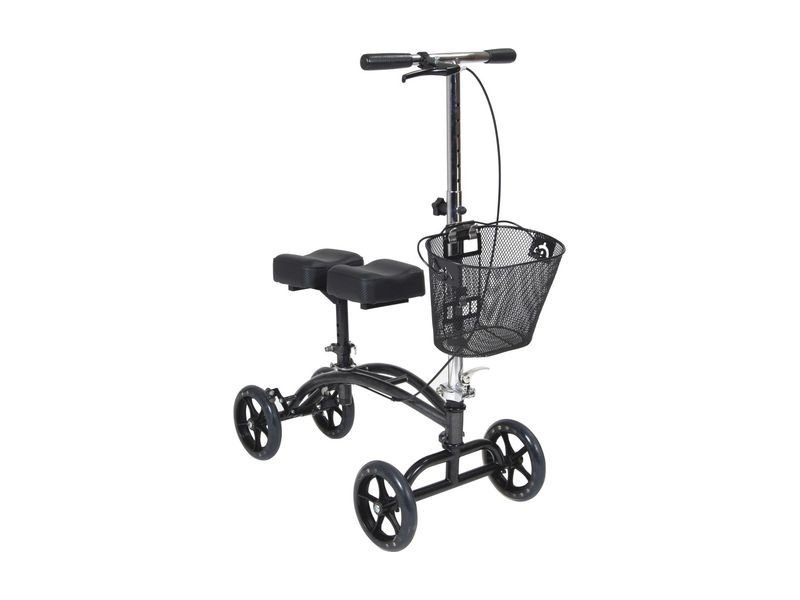
Knee scooter
You rest the knee of your injured leg on a padded platform and push with your good leg, steering with handlebars.
- Pros: much less tiring, more stable for many people, frees your hands with a basket, and lets you get around the house and stores more easily.
- Cons: can't be used on stairs, needs reasonably flat ground, and isn't suitable for injuries above the ankle (like knee injuries).
Which is better?
Many people use both: a knee scooter for getting around at home and out, and crutches for stairs. Older adults and people who find crutches exhausting are often much safer on a knee scooter. Always follow your surgeon's instructions.
Rent or buy, and insurance
Most recoveries last 4–8 weeks, so renting a knee scooter is usually the most economical choice. Insurance coverage for knee scooters varies by plan; Original Medicare often doesn't cover them, while many workers' comp carriers and some private plans do. Crutches are commonly covered with a prescription.
See knee scooters and crutches, or call 954-332-4378 to check availability for delivery in Broward, Miami-Dade or Palm Beach.
This article is general information, not medical advice. Follow your surgeon's weight-bearing instructions.